Samuel Johnson
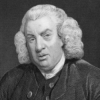
Samuel Johnson
Samuel Johnson, often referred to as Dr Johnson, was an English writer who made lasting contributions to English literature as a poet, essayist, moralist, literary critic, biographer, editor and lexicographer. Johnson was a devout Anglican and committed Tory, and has been described as "arguably the most distinguished man of letters in English history". He is also the subject of "the most famous single biographical work in the whole of literature," James Boswell's Life of Samuel Johnson...
NationalityEnglish
ProfessionNon-Fiction Author
Date of Birth18 September 1709
There is no crime more infamous than the violation of truth. It is apparent that men can be social beings no longer than they believe each other. When speech is employed only as the vehicle of falsehood, every man must disunite himself from others, inhabit his own cave and seek prey only for himself.
This man [Chesterfield], I thought, had been a Lord among wits; but I find he is only a wit among Lords.
Difference of thoughts will produce difference of language. He that thinks with more extent than another, will want words of a larger meaning; he that thinks with more subtilty will seek for terms of more nice discrimination; and where is the wonder, since words are but the images of things, that he who never knew the original should not know the copies?
Few faults of style, whether real or imaginary, excite the malignity of a more numerous class of readers, than the use of hard words.
Sleep undisturbed within the peaceful shrine till angels wake thee with a note like thine.
Surely nothing is more reproachful to a being endowed with reason, than to resign its powers to the influence of the air, and live in dependence on the weather and the wind, for the only blessings which nature has put into our power, tranquillity and benevolence. To look up to the sky for the nutriment of our bodies, is the condition of nature; to call upon the sun for peace and gaiety, or deprecate the clouds lest sorrow should overwhelm us, is the cowardice of idleness, and the idolatry of folly.
It is commonly observed, that when two Englishmen meet, their first talk is of the weather; they are in haste to tell each other, what each must already know, that it is hot or cold, bright or cloudy, windy or calm.
A thousand years may elapse before there shall appear another man with a power of versification equal to that of Pope.
Virtue is uncommon in all the classes of humanity; and I suppose it will scarcely be imagined more frequent in a prison than in other places. Yet...
...a common observation, that few are mended by imprisonment, and that he, whose crimes have made confinement necessary, seldom makes any other use of his enlargement, than to do, with greater cunning, what he did before with less.
As the mind must govern the hands, so in every society the man of intelligence must direct the man of labor.
Bias and impartiality is in the eye of the beholder.
If he does really think that there is no distinction between virtue and vice, why, sir, when he leaves our houses let us count our spoons.
It is commonly a weak man who marries for love.