Samuel Johnson
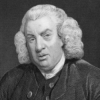
Samuel Johnson
Samuel Johnson, often referred to as Dr Johnson, was an English writer who made lasting contributions to English literature as a poet, essayist, moralist, literary critic, biographer, editor and lexicographer. Johnson was a devout Anglican and committed Tory, and has been described as "arguably the most distinguished man of letters in English history". He is also the subject of "the most famous single biographical work in the whole of literature," James Boswell's Life of Samuel Johnson...
NationalityEnglish
ProfessionNon-Fiction Author
Date of Birth18 September 1709
I should as soon think of contradicting a bishop
Language is the dress of thought; and as the noblest mien or most graceful action would be degraded and obscured by a garb appropriated to the gross employments of rusticks or mechanics, so the most heroick sentiments will lose their efficacy
The present time is seldom able to fill desire or imagination with immediate enjoyment, and we are forced to supply its deficiencies by recollection or anticipation.
Every reader should remember the diffidence of Socrates, and repair by his candour the injuries of time: he should impute the seeming defects of his author to some chasm of intelligence, and suppose that the sense which is now weak was once forcible
I have no more pleasure in hearing a man attempting wit and failing, than in seeing a man trying to leap over a ditch and tumbling into it
Confidence is a plant of slow growth; especially in an aged bosom
In the bottle discontent seeks for comfort, cowardice for courage, and bashfulness for confidence.
Reason and truth will prevail at last
Those who have no power to judge of past times but by their own, should always doubt their conclusions
Time quickly puts an end to artificial and accidental fame
Those who have any intention of deviating from the beaten roads of life, and acquiring a reputation superior to names hourly swept away by time among the refuse of fame, should add to their reason and their spirit the power of persisting in their pur
Attainment is followed by neglect, possession by disgust, and the malicious remark of the Greek epigrammatist on marriage may be applied to many another course of life, that its two days of happiness are the first and the last
When a man marries a widow his jealousies revert to the past: no man is as good as his wife says her first husband was
We owe to memory not only the increase of our knowledge, and our progress in rational inquiries, but many other intellectual pleasures