Samuel Johnson
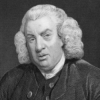
Samuel Johnson
Samuel Johnson, often referred to as Dr Johnson, was an English writer who made lasting contributions to English literature as a poet, essayist, moralist, literary critic, biographer, editor and lexicographer. Johnson was a devout Anglican and committed Tory, and has been described as "arguably the most distinguished man of letters in English history". He is also the subject of "the most famous single biographical work in the whole of literature," James Boswell's Life of Samuel Johnson...
NationalityEnglish
ProfessionNon-Fiction Author
Date of Birth18 September 1709
That eminence of learning is not to be gained without labour, at least equal to that which any other kind of greatness can require, will be allowed by those who wish to elevate the character of a scholar; since they cannot but know that every human acquisition is valuable in proportion to the difficulty of its attainment.
Sorrow is a kind of rust of the soul, which every new idea contributes in its passage to scour away. It is the putrefaction of stagnant life, and is remedied by exercise and motion.
Friendship, compounded of esteem and love, derives from one its tenderness and its permanence from the other.
The great effect of friendship is beneficence, yet by the first act of uncommon kindness it is endangered.
The most fatal disease of friendship is gradual decay, or dislike hourly increased by causes too slender for complaint, and too numerous for removal.
Prosperity's right hand is industry and her left hand is frugality.
Lawyers know life practically. A bookish man should always have them to converse with.
What signifies protesting so against flattery when a person speaks well of one, it must either be true or false, you know if true, let us rejoice in his good opinion if he lies, it is a proof at least that he loves more to please me, than to sit s
Though I love to spend, I hate be cheated, and I found that to build is to be robbed.
Falsehoods of convenience or vanity, falsehoods from which no evil immediately visible ensues, except the general degradation of human testimony, are very lightly uttered, and once uttered are sullenly supported.
Whoever commits a fraud is guilty not only of the particular injury to him who he deceives, but of the diminution of that confidence which constitutes not only the ease but the existence of society.
All imposture weakens confidence and chills benevolence.
Cunning has effect from the credulity of others, rather than from the abilities of those who are cunning. It requires no extraordinary talents to lie and deceive.
I would advise you Sir, to study algebra, if you are not already an adept in it: your head would be less muddy, and you will leave off tormenting your neighbors about paper and packthread, while we all live together in a world that is bursting with sin and sorrow.