Samuel Johnson
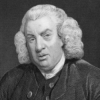
Samuel Johnson
Samuel Johnson, often referred to as Dr Johnson, was an English writer who made lasting contributions to English literature as a poet, essayist, moralist, literary critic, biographer, editor and lexicographer. Johnson was a devout Anglican and committed Tory, and has been described as "arguably the most distinguished man of letters in English history". He is also the subject of "the most famous single biographical work in the whole of literature," James Boswell's Life of Samuel Johnson...
NationalityEnglish
ProfessionNon-Fiction Author
Date of Birth18 September 1709
We may have many acquaintances, but we can have but few friends; this made Aristotle say that he that hath many friends hath none.
He that is already corrupt is naturally suspicious, and he that becomes suspicious will quickly become corrupt.
Parents and children seldom act in concert: each child endeavors to appropriate the esteem or fondness of the parents, and the parents, with yet less temptation, betray each other to their children.
I never have sought the world; the world was not to seek me.
I never take a nap after dinner but when I have had a bad night, and then the nap takes me.
Who drives fat oxen should himself be fat.
It is so far from being natural for a man and woman to live in a state of marriage, that we find all the motives which they have for remaining in that connection, and the restraints which civilised society imposes to prevent separation, are hardly sufficient to keep them together.
To have gold is to be in fear, and to want it to be sorrow.
Then with no throbs of fiery pain, No cold gradations of decay, Death broke at once the vital chain, And freed his soul the nearest way.
In all pleasures hope is a considerable part.
My diseases are an asthma and a dropsy and, what is less curable, seventy-five.
For who is pleased with himself.
I have thought of a pulley to raise me gradually; but that would give me pain, as it would counteract my natural inclination. I would have something that can dissipate the inertia and give elasticity to the muscles. We can heat the body, we can cool it; we can give it tension or relaxation; and surely it is possible to bring it into a state in which rising from bed will not be a pain.
Pain is less subject than pleasure to careless expression.