Samuel Johnson
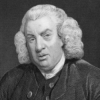
Samuel Johnson
Samuel Johnson, often referred to as Dr Johnson, was an English writer who made lasting contributions to English literature as a poet, essayist, moralist, literary critic, biographer, editor and lexicographer. Johnson was a devout Anglican and committed Tory, and has been described as "arguably the most distinguished man of letters in English history". He is also the subject of "the most famous single biographical work in the whole of literature," James Boswell's Life of Samuel Johnson...
NationalityEnglish
ProfessionNon-Fiction Author
Date of Birth18 September 1709
...it will not always happen that the success of a poet is proportionate to his labor.
You need a good editor because every writer thinks he can write a War and Peace, but by the time he gets it on paper, it's not War and Peace anymore; it's comic-book stuff. Your manuscript is both good and original. But the part that is good is not original, and the part that is original is not good.
Of many, imagined blessings it may be doubted whether he that wants or possesses them had more reason to be satisfied with his lot.
No, Sir, you will have much more influence by giving or lending money where it is wanted, than by hospitality.
Turn on the prudent ant thy heedful eyes. Observe her labors, sluggard, and be wise.
I am willing to love all of mankind, except an American.
Genius is that energy which collects, combines, amplifies, and animates.
Nothing has so exposed men of learning to contempt and ridicule as their ignorance of things which are known to all but themselves. Those who have been taught to consider the institutions of the schools as giving the last perfection to human abilities are surprised to see men wrinkled with study, yet wanting to be instructed in the minute circumstances of propriety, or the necessary form of daily transaction; and quickly shake off their reverence for modes of education which they find to produce no ability above the rest of mankind.
False taste is always busy to mislead those that are entering upon the regions of learning; and the traveller, uncertain of his way, and forsaken by the sun, will be pleased to see a fainter orb arise on the horizon, that may rescue him from total darkness, though with weak and borrowed lustre.
Ignorance, madam, pure ignorance.
Criticism, as it was first instituted by Aristotle, was meant as a standard of judging well.
There are innumerable questions to which the inquisitive mind can in this state receive no answer: Why do you and I exist? Why was this world created? Since it was to be created, why was it not created sooner?
I know not anything more pleasant, or more instructive, than to compare experience with expectation, or to register from time to time the difference between idea and reality. It is by this kind of observation that we grow daily less liable to be disappointed.
These are the men who, without virtue, labour, or hazard, are growing rich, as their country is impoverished; they rejoice, when obstinacy or ambition adds another year to slaughter and devastation; and laugh, from their desks, at bravery and science, while they are adding figure to figure, and cipher to cipher, hoping for a new contract from a new armament, and computing the profits of a siege or tempest.