Samuel Johnson
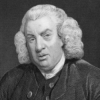
Samuel Johnson
Samuel Johnson, often referred to as Dr Johnson, was an English writer who made lasting contributions to English literature as a poet, essayist, moralist, literary critic, biographer, editor and lexicographer. Johnson was a devout Anglican and committed Tory, and has been described as "arguably the most distinguished man of letters in English history". He is also the subject of "the most famous single biographical work in the whole of literature," James Boswell's Life of Samuel Johnson...
NationalityEnglish
ProfessionNon-Fiction Author
Date of Birth18 September 1709
The hostility perpetually exercised between one man and another, is caused by the desire of many for that which only few can possess. Every man would be rich, powerful, and famous; yet fame, power, and riches, are only the names of relative conditions, which imply the obscurity, dependence, and poverty of greater numbers.
We are unreasonably desirous to separate the goods of life from those evils which Providence has connected with them, and to catch advantages without paying the price at which they are offered to us. Every man wishes to be rich, but very few have the powers necessary to raise a sudden fortune, either by new discoveries, or by superiority of skill in any necessary employment; and among lower understandings many want the firmness and industry requisite to regular gain and gradual acquisitions.
Human happiness has always its abatements; the brightest sunshine of success is not without a cloud.
Those whose abilities or knowledge incline them most to deviate from the general round of life are recalled from eccentricity by the laws of their existence.
Every class of society has its cant of lamentation, which is understood or regarded by none but themselves; and every part of life has its uneasiness, which those who do not feel them will not commiserate. An event which spreads distraction over half the commercial world, assembles the trading companies in councils and committees, and shakes the nerves of a thousand stockjobbers, is read by the landlord and the farmer with frigid indifference.
There is reason to suspect, that the distinctions of mankind have more show than value, when it is found that all agree to be weary alike of pleasures and of cares; that the powerful and the weak, the celebrated and obscure, join in one common wish, and implore from nature's hand the nectar of oblivion.
All envy would be extinguished, if it were universally known that there are none to be envied.
Faults and defects every work of man must have.
Every man has frequent grievances which only the solicitude of friendship will discover and remedy, and which would remain for ever unheeded in the mighty heap of human calamity, were it only surveyed by the eye of general benevolence equally attentive to every misery.
The necessities of our condition require a thousand offices of tenderness, which mere regard for the species will never dictate.
The great end of prudence is to give cheerfulness to those hours which splendour cannot gild, and acclamation cannot exhilarate; those soft intervals of unbended amusement, in which a man shrinks to his natural dimensions, and throws aside the ornaments or disguises which he feels in privacy to be useless incumbrances, and to lose all effect when they become familiar. To be happy at home is the ultimate result of all ambition, the end to which every enterprise and labour tends, and of which every desire prompts the prosecution.
The gratification which affluence of wealth, extent of power, and eminence of reputation confer, must be always, by their own nature, confined to a very small number; and the life of the greater part of mankind must be lost in empty wishes and painful comparisons, were not the balm of philosophy shed upon us, and our discontent at the appearances of unequal distribution soothed and appeased.
It is natural for every man uninstructed to murmur at his condition, because, in the general infelicity of life, he feels his own miseries without knowing that they are common to all the rest of the species; and, therefore, though he will not be less sensible of pain by being told that others are equally tormented, he will at least be freed from the temptation of seeking, by perpetual changes, that ease which is no where to be found, and though his diseases still continue, he escapes the hazard of exasperating it by remedies.
We are all prompted by the same motives, all deceived by the same fallacies, all animated by hope, obstructed by danger, entangled by desire, and seduced by pleasure.