Samuel Johnson
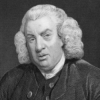
Samuel Johnson
Samuel Johnson, often referred to as Dr Johnson, was an English writer who made lasting contributions to English literature as a poet, essayist, moralist, literary critic, biographer, editor and lexicographer. Johnson was a devout Anglican and committed Tory, and has been described as "arguably the most distinguished man of letters in English history". He is also the subject of "the most famous single biographical work in the whole of literature," James Boswell's Life of Samuel Johnson...
NationalityEnglish
ProfessionNon-Fiction Author
Date of Birth18 September 1709
Praise, like gold and diamonds, owes its value only to its scarcity.
I have always considered it as treason against the great republic of human nature, to make any man's virtues the means of deceiving him.
Allow children to be happy in their own way, for what better way will they find?
Resolve not to be poor: whatever you have, spend less. Poverty is a great enemy to human happiness; it certainly destroys liberty, and it makes some virtues impracticable, and others extremely difficult.
It is reasonable to have perfection in our eye that we may always advance toward it, though we know it can never be reached.
To keep your secret is wisdom; but to expect others to keep it is folly.
Being in a ship is being in a jail, with the chance of being drowned.
The happiest conversation is that of which nothing is distinctly remembered, but a general effect of pleasing impression.
Almost every man wastes part of his life attempting to display qualities which he does not possess.
A wise man is cured of ambition by ambition itself; his aim is so exalted that riches, office, fortune and favour cannot satisfy him.
The mind is never satisfied with the objects immediately before it, but is always breaking away from the present moment, and losing itself in schemes of future felicity... The natural flights of the human mind are not from pleasure to pleasure, but from hope to hope.
It is a common error, and the greater and more mischievous for being so common, to believe that repentance best becomes and most concerns dying men. Indeed, what is necessary every hour of our life is necessary in the hour of death too, and as long as one lives he will have need of repentance, and therefore it is necessary in the hour of death too; but he who hath constantly exercised himself in it in his health and vigor, will do it with less pain in his sickness and weakness; and he who hath practiced it all his life, will do it with more ease and less perplexity in the hour of his death.
It is our first duty to serve society, and after we have done that, we may attend wholly to the salvation of our own souls.
Poetry cannot be translation