Samuel Johnson
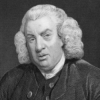
Samuel Johnson
Samuel Johnson, often referred to as Dr Johnson, was an English writer who made lasting contributions to English literature as a poet, essayist, moralist, literary critic, biographer, editor and lexicographer. Johnson was a devout Anglican and committed Tory, and has been described as "arguably the most distinguished man of letters in English history". He is also the subject of "the most famous single biographical work in the whole of literature," James Boswell's Life of Samuel Johnson...
NationalityEnglish
ProfessionNon-Fiction Author
Date of Birth18 September 1709
To love their country has been considered as virtue in men, whose love could not be otherwise than blind, because their preference was made without, a comparison; but it has never been my fortune to find, either in ancient or modern writers, any honourable mention of those, who have, with equal blindness, hated their country.
Parents are by no means exempt from the intoxication of dominion.
It is astonishing that any man can forbear enquiring seriously whether there is a God; whether God is just; whether this life is the only state of existence.
People in general do not willingly read if they have anything else to amuse them.
No man should attempt to teach others what he has never learned himself
The most fatal disease of friendship is gradual decay.
It is to be steadily inculcated, that virtue is the highest proof of understanding, and the only solid basis of greatness.
He who attempts to do all will waste his life in doing little.
Most men are unwilling to be taught.
Prejudice is a great time-saver. You can form opinions without having to get the facts. Prejudice not being founded on reason cannot be removed by argument.
Whatever is proposed, it is much easier to find reasons for rejecting than embracing.
We suffer equal pain from the pertinacious adhesion of unwelcome images, as from the evanescence of those which are pleasing and useful.
We have less reason to be surprised or offended when we find others differ from us in opinion, because we very often differ from ourselves.
We are more pained by ignorance than delighted by instruction.