Shunryu Suzuki
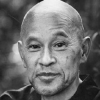
Shunryu Suzuki
Shunryu Suzukiwas a Sōtō Zen monk and teacher who helped popularize Zen Buddhism in the United States, and is renowned for founding the first Buddhist monastery outside Asia. Suzuki founded San Francisco Zen Center, which along with its affiliate temples, comprises one of the most influential Zen organizations in the United States. A book of his teachings, Zen Mind, Beginner's Mind, is one of the most popular books on Zen and Buddhism in the West...
NationalityJapanese
ProfessionLeader
Date of Birth18 May 1904
CountryJapan
There is no formula for generating the authentic warmth of love...Everyone has love, but it can only come out when he is convinced of the impossibility and frustration of trying to love himself. This conviction will not come through condemnations, through hating oneself, through calling self-love bad names in the universe. It comes only in the awareness that one has no self to love.
The practice of Zen mind is beginner's mind. The innocence of the first inquiry—what am I?—is needed throughout Zen practice. The mind of the beginner is empty, free of the habits of the expert, ready to accept, to doubt, and open to all the possibilities. It is the kind of mind which can see things as they are, which step by step and in a flash can realize the original nature of everything.
Ego is a social institution with no physical reality. The ego is simply your symbol of yourself.
Instead of respecting things, we want to use them for ourselves and if it is difficult to use them, we want to conquer them.
Those who sit perfectly physically usually take more time to obtain the true way of Zen.
Someone was sitting in front of a sunflower, watching the sunflower, a cup of sun, and so I tried it too. It was wonderful; I felt the whole universe in the sunflower. That was my experience. Sunflower meditation. A wonderful confidence appeared. You can see the whole universe in a flower.
So when you try hard to make your own way, you will help others...before you make your own way you cannot help anyone, and no one can help you.
So the secret is just to say 'Yes!' and jump off from here. Then there is no problem. It means to be yourself, always yourself, without sticking to an old self.
And we should forget, day by day, what we have done; this is true non-attachment. And we should do something new. To do something new, of course we must know our past, and this is alright. But we should not keep holding onto anything we have done; we should only reflect on it. And we must have some idea of what we should do in the future. But the future is the future, the past is the past; now we should work on something new.
We die, and we do not die.
Wabi means spare, impoverished; simple and functional. It connotes a transcendence of fad and fashion. The spirit of wabi imbues all the Zen arts, from calligraphy to karate, from the tea ceremony to Zen archery.
The best way to control cow and sheep is to give them a big grazing field.
If your practice is good, you may become proud of it. What you do is good, but something more is added to it. Pride is extra. Right effort is to get rid of something extra.
If I tell you something, you will stick to it and limit your own capacity to find out for yourself.