Shunryu Suzuki
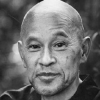
Shunryu Suzuki
Shunryu Suzukiwas a Sōtō Zen monk and teacher who helped popularize Zen Buddhism in the United States, and is renowned for founding the first Buddhist monastery outside Asia. Suzuki founded San Francisco Zen Center, which along with its affiliate temples, comprises one of the most influential Zen organizations in the United States. A book of his teachings, Zen Mind, Beginner's Mind, is one of the most popular books on Zen and Buddhism in the West...
NationalityJapanese
ProfessionLeader
Date of Birth18 May 1904
CountryJapan
Even if the sun were to rise from the west, the Bodhisattva has only one way.
If your mind is empty, it is ready for anything. In the beginner's mind there are many possibilities; in the expert's mind there are few.
Bowing is a very serious practice. You should be prepared to bow, even in your last moment. even though it is impossible to get rid of our self-centered desires, we have to do it. Our true nature wants us to.
If you continue this simple practice every day, you will obtain some wonderful power. Before you attain it, it is something wonderful, but after you attain it, it is nothing special.
To renounce things is not to give them up. It is to acknowledge that all things go away.
Religion is not any particular teaching. Religion is everywhere.
An enlightened person does not ignore things and does not stick to things, not even to the truth.
The Zen way of calligraphy is to write in the most straightforward, simple way as if you were a beginner, not trying to make something skillful or beautiful, but simply writing with full attention as if you were discovering what you were writing for the first time; then your full nature will be in your writing.
If you want to study Zen, you should forget all your previous ideas and just practice zazen and see what kind of experience you have in your practice. That is naturalness.
The more you practice zazen, the more you will be able to accept something as your own, whatever it is.
You must be true to your own way until at last you actually come to the point where you see it is necessary to forget all about yourself.
You want to eliminate your evil desires in order to reveal your Buddha nature, but where will you throw them away?
If you take pride in your attainment or become discouraged because of your idealistic effort, your practice will confine you by a thick wall.
To stop your mind does not mean to stop the activities of mind. It means your mind pervades your whole body.