Tariq Ramadan
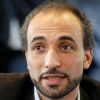
Tariq Ramadan
Tariq Ramadanis a Swiss academic, philosopher and writer. He is the professor of Contemporary Islamic Studies in the Faculty of Oriental Studies at St Antony's College, Oxford and also teaches at the Oxford Faculty of Theology. He is a visiting professor at the Faculty of Islamic Studies, the Université Mundiapolisand several other universities around world. He is also a senior research fellow at Doshisha University. He is the director of the Research Centre of Islamic Legislation and Ethics, based in...
NationalitySwiss
ProfessionWriter
Date of Birth26 August 1962
CountrySwitzerland
We've got to get away from the idea that scholars in the Islamic world can do our thinking for us. We need to start thinking for ourselves.
I focus on Islamic applied ethics in many fields, and here I am saying that coming back to the Qu'ran and the sunnah as our reference point does not mean that we depend for our ethics on 'Islam as opposed to the others'.
We are not here to adopt Western values, we are here to colonize the U.S. (and Canada) and spread Islamic sharia law Canada has one of the easiest legal systems to penetrate and advance sharia from within...but if that doesn't work, we won't hesitate to use violent jihad.
I have never, so far, in all the studies I have done, met a contradiction between what the human, experimental and natural sciences are telling us and the Islamic rules. In fact, the opposite is true: anything that is coming from the modern sciences is helping me better understand the text. It's not a contradiction. It's a relation.
Saying that I am talking out of both sides of my mouth just proves my very point. Politicians would bypass real social issues by referring to my grandfather, who founded the Muslim Brotherhood, or to my brother, currently chairman of the Islamic Centre in Geneva.
We need to deal with three things that are important: first, we need a very deep reconsideration of how we are dealing with the economy. Second, there must be a very deep reconsideration of our way of life. We cannot simply adopt American-style consumer culture. To Islamize that is to de-Islamize Islam.Thirdly, it is important for us to understand the economy and the environment are common challenges for everyone. This is where the singularity of Islamic principles needs to join the universal values that we share with others.
I'm working on different fields. One of my next books Insha'Allah will be a novel because it's important to explore the heart and imagination, the spiritual side. I've been working for twenty five years in the legal field and now I'm reaching what I want, which is an Islamic applied ethics and I'm also dealing with Muslims in the West.
There is nothing more Islamic than critical thinking.
We always think from where we come from. We always think from the sources that shape our understanding. I think about the world through the lens of my Islamic tradition. I accept this but I must also have intellectual humility.
We have to be very cautious not to accept the scam of polarization we see in the media. It is not in fact between secularists and Islamists, it is a battle within the Islamic reference.
The fact that this organisation is called the Islamic State reveals something even deeper. In fact, it implies that every single Islamist party in Egypt, Iraq or Tunisia are not really representing Islam and Muslim people. Nowadays, political Islam is going through a crisis, however this crisis is necessary, for it will lead to a changing way of thinking. In order to make it out of this dead-end, reviewing political Islam becomes mandatory.
I look to Islamic ethics to find something that can provide the basis for shared values with other traditions, and ultimately universal values. This ties into the point I made in a book, The Quest for Meaning, that the only way for values to be universal is if they are shared universal values. My main point is, in this quest for value the aim is not to express your distinctness from others, but about being able to contribute to the discussion of universal value.
IS [Islamic State] has played a major role in helping Bashar al-Assad to reposition Syria on the international scene. Now, it is almost impossible to come up with a solution that would exclude him. The political game appears to be very cynical indeed.
Saying that the origin of the Islamic State (IS) is within the Muslim Brotherhood organisation only strengthens IS.