Tariq Ramadan
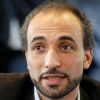
Tariq Ramadan
Tariq Ramadanis a Swiss academic, philosopher and writer. He is the professor of Contemporary Islamic Studies in the Faculty of Oriental Studies at St Antony's College, Oxford and also teaches at the Oxford Faculty of Theology. He is a visiting professor at the Faculty of Islamic Studies, the Université Mundiapolisand several other universities around world. He is also a senior research fellow at Doshisha University. He is the director of the Research Centre of Islamic Legislation and Ethics, based in...
NationalitySwiss
ProfessionWriter
Date of Birth26 August 1962
CountrySwitzerland
We've got to get away from the idea that scholars in the Islamic world can do our thinking for us. We need to start thinking for ourselves.
I think many thinkers and activists, even in the Islamist parties like the Muslim Brotherhood, and the people who left the Muslim Brotherhood to follow Abou el-Fatouh, these people do have an understanding that the relationship between religion and the state must be re-thought and re-assessed. They're not going to use the concept of secularism in any straightforward way, because the concept of secularism is still far too loaded in that part of the world.
We must re-center philosophy within our frame of reference which I think is the way to deal with it.
I am too old to think that numbers are creating change
There is nothing more Islamic than critical thinking.
We always think from where we come from. We always think from the sources that shape our understanding. I think about the world through the lens of my Islamic tradition. I accept this but I must also have intellectual humility.
In Ramadan, you should eat less and think more.
I wrote a call to the contemporary Muslim conscience, saying to the ordinary people that we might not like the video or the cartoons, but that violence certainly isn't the right answer. I don't think laws are going to solve the problem.
The fact that this organisation is called the Islamic State reveals something even deeper. In fact, it implies that every single Islamist party in Egypt, Iraq or Tunisia are not really representing Islam and Muslim people. Nowadays, political Islam is going through a crisis, however this crisis is necessary, for it will lead to a changing way of thinking. In order to make it out of this dead-end, reviewing political Islam becomes mandatory.
Pushing the limits, to be thought provoking, pushing people to think and question the limits, it's not always bad for the rules if you're confident because it can even strengthen your understanding of religion in the process.
Teach the heart not to give way to proud emotions and arrogant thinking; bring the mind to heart-soothing solutions that make it possible to control oneself gently and wisely.
I think that political parties are fuelling this fear in order to create divisions. The more we bring up fear, the more we neglect real political issues. Political debate in France is crumbling since every single issue is brought to Islam now.
Criticizing to destroy is easy, thinking in order to build is much more difficult to achieve
I opposed the Fatwa against Salman Rushdie. I read the book and took a critical distance. I did not think The Satanic Verses is a blasphemous book. I did not consider the book as being a great read, but as an intellectual I read, I assess, and I respond. I make a difference between true freedom of expression to which we owe a response and provocation, which we ignore.