Thomas Jefferson
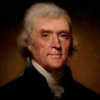
Thomas Jefferson
Thomas Jeffersonwas an American Founding Father who was the principal author of the Declaration of Independence. He was elected the second Vice President of the United States, serving under John Adams and in 1800 was elected the third President. Jefferson was a proponent of democracy, republicanism, and individual rights, which motivated American colonists to break from Great Britain and form a new nation. He produced formative documents and decisions at both the state and national level...
NationalityAmerican
ProfessionUS President
Date of Birth13 April 1743
CityShadwell, VA
CountryUnited States of America
Principle will, in... most... cases open the way for us to correct conclusion.
When we come to the moral principles on which the government is to be administered, we come to what is proper for all conditions of society. Liberty, truth, probity, honor, are declared to be the four cardinal principles of society. I believe that morality, compassion, generosity, are innate elements of the human constitution; that there exists a right independent of force.
Our part is to pursue with steadiness what is right, turning neither to right nor left for the intrigues or popular delusions of the day, assured that the public approbation will in the end be with us.
Men are disposed to live honestly, if the means of doing so are open to them.
Nature [has] implanted in our breasts a love of others, a sense of duty to them, a moral instinct, in short, which prompts us irresistibly to feel and to succor their distresses.
I believe that justice is instinct and innate, that the moral sense is as much a part of our constitution as that of feeling, seeing, or hearing; as a wise Creator must have seen to be necessary in an animal destined to live in society.
The true fountains of evidence [are] the head and heart of every rational and honest man. It is there nature has written her moral laws, and where every man may read them for himself.
I may err in my measures, but never shall deflect from the intention to fortify the public liberty by every possible means, and to put it out of the power of the few to riot on the labors of the many.
The equal rights of man and the happiness of every individual are now acknowledged to be the only legitimate objects of government.
No one has a right to obstruct another exercising his faculties innocently for the relief of sensibilities made a part of his nature.
Laws abridging the natural right of the citizen should be restrained by rigorous constructions within their narrowest limits.
All... natural rights may be abridged or modified in [their] exercise by law.
Circumstances sometimes require, that rights the most unquestionable should be advanced with delicacy.
The idea is quite unfounded that on entering into society we give up any natural rights.