Thomas Jefferson
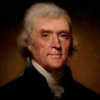
Thomas Jefferson
Thomas Jeffersonwas an American Founding Father who was the principal author of the Declaration of Independence. He was elected the second Vice President of the United States, serving under John Adams and in 1800 was elected the third President. Jefferson was a proponent of democracy, republicanism, and individual rights, which motivated American colonists to break from Great Britain and form a new nation. He produced formative documents and decisions at both the state and national level...
NationalityAmerican
ProfessionUS President
Date of Birth13 April 1743
CityShadwell, VA
CountryUnited States of America
Almighty God hath created the mind free. All attempts to influence it by temporal punishments or burthens...are a departure from the plan of the holy Author of our religion...No man shall be compelled to frequent or support religious worship or ministry or shall otherwise suffer on account of his religious opinions or belief, but all men shall be free to profess and by argument to maintain, their opinions in matters of religion. I know but one code of morality for men whether acting singly or collectively.
But when a long train of abuses and usurpations, pursuing invariably the same Object evinces a design to reduce them under absolute Despotism, it is their right, it is their duty, to throw off such Government, and to provide new Guards for their future security.
I hold it that a little rebellion, now and then, is a good thing, and as necessary in the political world as storms are in the physical. Unsuccessful rebellions, indeed, generally establish the encroachments on the rights of the people, which have produced them. An observation of this truth should render honest republican governors so mild in their punishment of rebellions, as not to discourage them too much. It is medicine necessary for the sound health of government.
We shall divert through our own Country a branch of commerce which the European States have thought worthy of the most important struggles and sacrifices, and in the event of peace on terms which have been contemplated by some powers we shall form to the American union a barrier against the dangerous extension of the British Province of Canada and add to the Empire of liberty an extensive and fertile Country thereby converting dangerous Enemies into valuable friends.
The art of life is the art of avoiding pain; and he is the best pilot, who steers clearest of the rocks and shoals with which it is beset.
But this momentous question, like a fire bell in the night, awakened and filled me with terror.
Any woodsman can tell you that in a broken and sundered nest, one can hardly find more than a precious few whole eggs. So it is with the family.
Public employment contributes neither to advantage nor happiness. It is but honorable exile from one's family and affairs.
You have not been mistaken in supposing my views and feeling to be in favor of the abolition of war. Of my dispos[i]tion to maintain peace until its condition shall be made less tolerable than that of war itself, the world has had proofs, and more, perhaps, than it has approved. I hope it is practicable, by improving the mind and morals of society, to lessen the dispos[i]tion to war; but of its abolition I despair.
That peace, safety, and concord may be the portion of our native land, and be long enjoyed by our fellow-citizens, is the most ardent wish of my heart, and if I can be instrumental in procuring or preserving them, I shall think I have not lived in vain.
Peace with all nations, and the right which that gives us with respect to all nations, are our object.
I considered 4 of these bills [of the revised code of Virginia] as forming a system by which every fibre would be eradicated of antient or future aristocracy; and a foundation laid for a government truly republican.
Experience having long taught me the reasonableness of mutual sacrifices of opinion among those who are to act together for any common object, and the expediency of doing what good we can; when we cannot do all we would wish.
He who is permitted by law to have no property of his own, can with difficulty conceive that property is founded in anything but force.