Thomas Jefferson
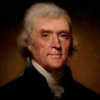
Thomas Jefferson
Thomas Jeffersonwas an American Founding Father who was the principal author of the Declaration of Independence. He was elected the second Vice President of the United States, serving under John Adams and in 1800 was elected the third President. Jefferson was a proponent of democracy, republicanism, and individual rights, which motivated American colonists to break from Great Britain and form a new nation. He produced formative documents and decisions at both the state and national level...
NationalityAmerican
ProfessionUS President
Date of Birth13 April 1743
CityShadwell, VA
CountryUnited States of America
... I have sworn upon the altar of god...
The remaining revenue on the consumption of foreign luxuries to domestic comforts, being collected on our seaboard and frontiers only, and incorporated with the transactions of our mercantile citizens, it may be the pleasure and the pride of an American to ask, What farmer, what merchant, what laborer ever sees a tax gatherer of the United States?
With respect to our State and federal governments, I do not think their relations correctly understood by foreigners. They generally suppose the former subordinate to the latter. But this is not the case. They are co-ordinate departments of one simple and integral whole.
Blest is that nation whose silent course of happiness furnishes nothing for history to say.
You see I am an enthusiast on the subject of the arts. But it is an enthusiasm of which I am not ashamed, as its object is to improve the taste of my countrymen, to increase their reputation, to reconcile to them the respect of the world, and procure them its praise.
The best commentary on the principles of government which has ever been written.
A single zealot may commence prosecutor, and better men be his victims.
Everything is useful which contributes to fix the principles and practices of virtue.
Without society, and a society to our taste, men are never contented.
Agreeable society is the first essential in constituting the happiness and of course the value of our existence.
Sensibility of mind is indeed the parent of every virtue, but it is the parent of much misery, too.
Peace is our passion.
Of all the cankers of human happiness none corrodes with so silent, yet so baneful an influence, as indolence.
If thinking men would have the courage to think for themselves, and to speak what they think, it would be found they do not differ in religious opinions as much as is supposed.