Thomas Jefferson
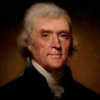
Thomas Jefferson
Thomas Jeffersonwas an American Founding Father who was the principal author of the Declaration of Independence. He was elected the second Vice President of the United States, serving under John Adams and in 1800 was elected the third President. Jefferson was a proponent of democracy, republicanism, and individual rights, which motivated American colonists to break from Great Britain and form a new nation. He produced formative documents and decisions at both the state and national level...
NationalityAmerican
ProfessionUS President
Date of Birth13 April 1743
CityShadwell, VA
CountryUnited States of America
I am convinced that those societies (such as the Native American peoples) which live without government enjoy in their general mass an infinitely greater degree of happiness than those who live under the European governments. Among the former, public opinion is in the place of law, & restrains morals as powerfully as laws ever did anywhere. Among the latter, under pretence of governing they have divided their nations into two classes, wolves & sheep. I do not exaggerate.
Against us are all timid men who prefer the calm of despotism to the boisterous sea of liberty We are likely to preserve the liberty we have obtained only by unremitting labors and perils.
The tumults in America I expected would have produced in Europe an unfavorable opinion of our political state. But it has not. On the contrary, the small effect of these tumults seems to have given more confidence in the firmness of our governments. The interposition of the people themselves on the side of government has had a great effect on the opinion here in Europe.
God forbid we should ever be twenty years without such a rebellion... We have had thirteen States independent for eleven years. There has been one rebellion. That comes to one rebellion in a century and a half, for each State. What country before ever existed a century and a half without a rebellion.
We shall all consider ourselves unauthorized to saddle posterity with our debts, and morally bound to pay them ourselves; and consequently within what may be deemed the period of a generation, or the life of the majority.
We are overdone with banking institutions, which have banished the precious metals, and substituted a more fluctuating and unsafe medium... These have withdrawn capital from useful improvements and employments to nourish idleness... These are evils more easily to be deplored than remedied.
We are completely saddled and bridled, and... the bank is so firmly mounted on us that we must go where it will guide.
The banks themselves were doing business on capitals three-fourths of which were fictitious. This fictitious capital... is now to be lost, and to fall on somebody; it must take on those who have property to meet it, and probably on the less cautious part, who, not aware of the impending catastrophe, have suffered themselves to contract, or to be in debt, and must now sacrifice their property of a value many times the amount of the debt. We have been truly sowing the wind, and are now reaping the whirlwind.
I am conscious that an equal division of property is impracticable, but the consequences of this enormous inequality producing so much misery to the bulk of mankind, legislators cannot invent too many devices for subdividing property.
At the time we were funding our national debt, we heard much about "a public debt being a public blessing"; that the stock representing it was a creation of active capital for the aliment of commerce, manufactures and agriculture. This paradox was well adapted to the minds of believers in dreams.
A community of small farmers... land property owners, will be the only assurance that the freedom our republic offers will be guaranteed to each and every citizen.
Don't spend your money till you have it.
Educate and inform the whole mass of the people.
Those who wish to be ignorant and free, believe in something that never was and never shall be.