Thomas Jefferson
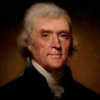
Thomas Jefferson
Thomas Jeffersonwas an American Founding Father who was the principal author of the Declaration of Independence. He was elected the second Vice President of the United States, serving under John Adams and in 1800 was elected the third President. Jefferson was a proponent of democracy, republicanism, and individual rights, which motivated American colonists to break from Great Britain and form a new nation. He produced formative documents and decisions at both the state and national level...
NationalityAmerican
ProfessionUS President
Date of Birth13 April 1743
CityShadwell, VA
CountryUnited States of America
A strict observance of the written laws is doubtless one of the high virtues of a good citizen, but it is not the highest. The laws of necessity, of self-preservation, of saving our country when in danger, are of higher obligation.
The two principles on which our conduct towards the Indians should be founded, are justice and fear. After the injuries we have done them, they cannot love us.
The man who fears no truth has nothing to fear from lies.
the man that reads nothing is better educated than the man that reads nothing more than newspapers
The freedom of the press is on of the great bulwarks of liberty, and can never be restrained but by a despotic government
The foundation on which all our constitution are built is the natural equality of man
The care of human life and happiness and not their destruction is the first and only legitimate object of good government.
The firmness with which the people have withstood the late abuses of the press, the discernment they have manifested between truth and falsehood, show that they may safely be trusted to hear everything true and false, and to form a correct judgment b
The flames kindled on the 4 of July 1776, have spread over too much of the globe to be extinguished by the feeble engines of despotism; on the contrary, they will consume these engines and all who work them
A government big enough to supply you with everything you need is a government big enough to take away everything that you have.... The course of history shows that as the government grows, liberty decreases.
Agriculture, manufactures, commerce and navigation, the four pillars of our prosperity, are the most thriving when left most free to individual enterprise
The construction applied ... to those parts of the Constitution of the United States which delegate Congress a power ... ought not to be construed as themselves to give unlimited powers, nor a part to be so taken as to destroy the whole residue of that instrument.
A nation as a society forms a moral person, and every member of it is personally responsible for his society
The legitimate powers of government extend to such acts only as they are injurious to others.