William James
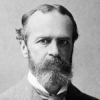
William James
William Jameswas an American philosopher and psychologist who was also trained as a physician. The first educator to offer a psychology course in the United States, James was one of the leading thinkers of the late nineteenth century and is believed by many to be one of the most influential philosophers the United States has ever produced, while others have labelled him the "Father of American psychology". Along with Charles Sanders Peirce and John Dewey, he is considered to be...
NationalityAmerican
ProfessionPhilosopher
Date of Birth11 January 1842
CityNew York City, NY
CountryUnited States of America
Habit is the great flywheel of society.
All natural happiness thus seems infected with a contradiction. The breath of the sepulchre surrounds it.
The lunatic's visions of horror are all drawn from the material of daily fact.
The "through-and-through" universe seems to suffocate me with its infallible impeccable all-pervasiveness. Its necessity , with no possibilities; its relations, with no subjects, make me feel as if I had entered into a contract with no reserved rights ... It seems too buttoned-up and white-chokered and clean-shaven a thing to speak for the vast slow-breathing unconscious Kosmos with its dread abysses and its unknown tides.
Man is essentially the imitative animal. His whole educabilityand in fact the whole history of civilization depend on this trait, which his strong tendencies to rivalry, jealousy, and acquisitiveness reinforce.
There is but one indefectibly certain truth , and that is the truth that pyrrhonistic scepticism itself leaves standing, the truth that the present phenomenon of consciousness exists.
Our minds thus grow in spots; and like grease-spots, the spots spread. But we let them spread as little as possible: we keep unaltered as much of our old knowledge, as many of our old prejudices and beliefs, as we can. We patch and tinker more than we renew. The novelty soaks in; it stains the ancient mass; but it is also tinged by what absorbs it.
A paradise of inward tranquility seems to be faith's usual result.
Our intelligence cannot wall itself up alive, like a pupa in a chrysalis. It must at any cost keep on speaking terms with the universe that engendered it.
Philosophy, beginning in wonder, as Plato and Aristotle said, is able to fancy everything different from what it is. It sees the familiar as if it were strange, and the strange as if it were familiar. It can take things up and lay them down again. It rouses us from our native dogmatic slumber and breaks up our caked prejudices.
It makes a tremendous emotional and practical difference to one whether one accepts the universe in the drab discolored way of stoic resignation to necessity, or with the passionate happiness of Christian saints.
The squalid cash interpretation put on the word success — is our national disease.
Religions have approved themselves; they have ministered to sundry vital needs which they found reigning. When they violated other needs too strongly, or when other faiths came which served the same needs better, the first religions were supplanted.
The states of consciousness are all that psychology needs to do her work with. Metaphysics or theology may prove the Soul to exist; but for psychology the hypothesis of such a substantial principle of unity is superfluous.