William James
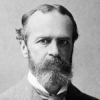
William James
William Jameswas an American philosopher and psychologist who was also trained as a physician. The first educator to offer a psychology course in the United States, James was one of the leading thinkers of the late nineteenth century and is believed by many to be one of the most influential philosophers the United States has ever produced, while others have labelled him the "Father of American psychology". Along with Charles Sanders Peirce and John Dewey, he is considered to be...
NationalityAmerican
ProfessionPhilosopher
Date of Birth11 January 1842
CityNew York City, NY
CountryUnited States of America
Voices of the glorified urge us onward. They who have passed from the semblances of time to the realities of eternity call upon us to advance. The rest that awaits us invites us forward. We do not pine for our rest before God wills it. We long for no inglorious rest. We are thankful rather for the invaluable training of difficulty, the loving discipline of danger and strife. Yet in the midst of it all the prospect of rest invites us heavenward. Through all, and above all, God cries, "Go forward!" "Come up higher!
I don't see how an epigram, being a bolt from the blue, with no introduction or cue, ever gets itself writ.
The God of many men is little more than their court of appeal against the damnatory judgment passed on their failures by the opinion of the world.
So our self-feeling in this world depends entirely on what we back ourselves to be and do.
[Pragmatism's] only test of probable truth is what works best in the way of leading us, what fits every part of life best and combines with the collectivity of experience's demands, nothing being omitted.
The truth remains that, after adolescence has begun, "words, words, words," must constitute a large part, and an always larger part as life advances, of what the human being has to learn.
The trail of the human serpent is thus over everything.
The work that leads to a doctor's degree is a constant temptation to sacrifice one's growth as a man to one's growth as a specialist.
We have nothing to do but to receive, resting absolutely upon the merit , power , and love of our Redeemer.
Everything which is demanded is by that fact a good.
Every claim creates an obligation.
Our beliefs and our attention are the same fact.
There are 3 rules to follow if you want to change; (1) Start immediately, (2) Do it flamboyantly, (3) No exceptions.
Who does not see that we are likely to ascertain the distinctive significance of religious melancholy and happiness, or of religious trances, far better by comparing them as conscientiously as we can with other varieties of melancholy, happiness, and trance, than by refusing to consider their place in any more general series, and treating them as if they were outside of nature's order altogether?