Blaise Pascal
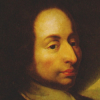
Blaise Pascal
Blaise Pascalwas a French mathematician, physicist, inventor, writer and Christian philosopher. He was a child prodigy who was educated by his father, a tax collector in Rouen. Pascal's earliest work was in the natural and applied sciences where he made important contributions to the study of fluids, and clarified the concepts of pressure and vacuum by generalising the work of Evangelista Torricelli. Pascal also wrote in defence of the scientific method...
NationalityFrench
ProfessionPhilosopher
Date of Birth19 June 1623
CityClermont-Ferrand, France
CountryFrance
I would inquire of reasonable persons whether this principle: Matter is naturally wholly incapable of thought, and this other: I think, therefore I am, are in fact the same in the mind of Descartes, and in that of St. Augustine, who said the same thing twelve hundred years before.
Human life is thus only a perpetual illusion; men deceive and flatter each other. No one speaks of us in our presence as he does of us in our absence. Human society is founded on mutual deceit; few friendships would endure if each knew what his friend said of him in his absence, although he then spoke in sincerity and without passion.
The only thing which consoles for our miseries is diversion, and yet this is the greatest of our miseries. For it is this which principally hinders us from reflecting upon ourselves and which makes us imperceptibly ruin ourselves.
Sneezing absorbs all the functions of the soul just as much as the [sexual] act, but we do not draw from it the same conclusions against the greatness of man, because it is involuntary; although we bring it about, we do so involuntarily. It is not for the sake of the thing in itself but for another end, and is therefore not a sign of man's weakness, or his subjection to this act.
True eloquence makes light of eloquence, true morality makes light of morality; that is to say, the morality of the judgment, which has no rules, makes light of the morality of the intellect.... To make light of philosophy is to be a true philosopher.
Eloquence is a way of saying things in such a way, first, that those to whom we speak may listen to them without pain and with pleasure, and second, that they feel themselves interested, so that self-love leads them more willingly to reflection upon it.
Nothing is more dastardly than to act with bravado toward God.
We do not rest satisfied with the present.... So imprudent we are that we wander in the times which are not ours and do not thinkof the only one which belongs to us; and so idle are we that we dream of those times which are no more and thoughtlessly overlook that which alone exists. For the present is generally painful to us.
Nothing is so important to man as his own state; nothing is so formidable to him as eternity. And thus it is unnatural that thereshould be men indifferent to the loss of their existence and to the perils of everlasting suffering.
Without [diversion] we would be in a state of weariness, and this weariness would spur us on to seek a more solid means of escaping from it. But diversion amuses us, and leads us unconsciously to death.
If we dreamed the same thing every night, it would affect us much as the objects we see every day. And if a common workman were sure to dream every night for twelve hours that he was a king, I believe he would be almost as happy as a king who should dream every night for twelve hours on end that he was a common workman.
What matters it that man should have a little more knowledge of the universe? If he has it, he gets little higher. Is he not always infinitely removed from the end, and is not the duration of our life equally removed from eternity, even if it lasts ten years longer?
Since [man] is infinitely removed from comprehending the extremes, the end of things and their beginning are hopelessly hidden from him in an impenetrable secret; he is equally incapable of seeing the nothing from which he was made, and the infinite in which he is swallowed up.
Undoubtedly equality of goods is just; but, being unable to cause might to obey justice, men has made it just to obey might. Unable to strengthen justice, they have justified might--so that the just and the strong should unite, and there should be peace, which is the sovereign good.