John Ruskin
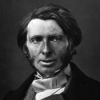
John Ruskin
John Ruskinwas the leading English art critic of the Victorian era, also an art patron, draughtsman, watercolourist, a prominent social thinker and philanthropist. He wrote on subjects as varied as geology, architecture, myth, ornithology, literature, education, botany and political economy. His writing styles and literary forms were equally varied. Ruskin penned essays and treatises, poetry and lectures, travel guides and manuals, letters and even a fairy tale. The elaborate style that characterised his earliest writing on art was later superseded...
NationalityEnglish
ProfessionWriter
Date of Birth8 February 1819
Unless we perform divine service with every willing act of our life, we never perform it at all.
See that your children be taught, not only the labors of the earth, but the loveliness of it.
People cannot live by lending money to one another.
All great art is the expression of man's delight in God's work, not his own.
One who does not know when to die, does not know how to live.
We have seen when the earth had to be prepared for the habitation of man, a veil, as it were, of intermediate being was spread between him and its darkness, in which were joined in a subdued measure, the stability and insensibility of the earth, and the passion and perishing of mankind.
Beethoven always sounds to me like the upsetting of a bag of nails, with here and there an also dropped hammer.
Men are more evanescent than pictures, yet one sorrows for lost friends, and pictures are my friends. I have none others. I am never long enough with men to attach myself to them; and whatever feelings of attachment I have are to material things.
In order that a man may be happy, it is necessary that he should not only be capable of his work, but a good judge of his work.
Science lives only in quiet places, and with odd people, mostly poor.
The beginning and almost the end of all good law is that everyone shall work for their bread and receive good bread for their work.
If the design of the building be originally bad, the only virtue it can ever possess will be signs of antiquity.
What is really desired, under the name of riches, is essentially, power over men ... this power ... is in direct proportion to the poverty of the men over whom it is exercised, and in inverse proportion to the number of persons who are as rich as ourselves.
What right have you to take the word wealth, which originally meant well-being, and degrade and narrow it by confining it to certain sorts of material objects measured by money.