John Ruskin
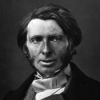
John Ruskin
John Ruskinwas the leading English art critic of the Victorian era, also an art patron, draughtsman, watercolourist, a prominent social thinker and philanthropist. He wrote on subjects as varied as geology, architecture, myth, ornithology, literature, education, botany and political economy. His writing styles and literary forms were equally varied. Ruskin penned essays and treatises, poetry and lectures, travel guides and manuals, letters and even a fairy tale. The elaborate style that characterised his earliest writing on art was later superseded...
NationalityEnglish
ProfessionWriter
Date of Birth8 February 1819
If some people really see angels where others see only empty space, let them paint the angels: only let not anybody else think they can paint an angel too, on any calculated principles of the angelic.
To invent a story, or admirably and thoroughly tell any part of a story, it is necessary to grasp the entire mind of every personage concerned in it, and know precisely how they would be affected by what happens; which to do requires a colossal intellect: but to describe a separate emotion delicately, it is only needed that one should feel it oneself; and thousands of people are capable of feeling this or that noble emotion, for one who is able to enter into all the feelings of someone sitting on the other side of the table.
I am far more provoked at being thought foolish by foolish people, than pleased at being thought sensible by sensible people; and the average proportion of the numbers of each is not to my advantage.
I tell you (dogmatically, if you like to call it so, knowing it well) a square inch of man's engraving is worth all the photographs that were ever dipped in acid... Believe me, photography can do against line engraving just what Madame Tussaud's wax-work can do against sculpture. That and no more. (1865)
There is but one question ultimately to be asked respecting every line you draw, Is it right or wrong? If right, it most assuredly is not a "free" line, but an intensely continent, restrained and considered line; and the action of the hand in laying it is just as decisive, and just as "free" as the hand of a first-rate surgeon in a critical incision.
Expression, sentiment, truth to nature, are essential: but all those are not enough. I never care to look at a picture again, if it be ill composed; and if well composed I can hardly leave off looking at it.
And besides; the problem of land, at its worst, is a bye one; distribute the earth as you will, the principal question remains inexorable, Who is to dig it? Which of us, in brief word, is to do the hard and dirty work for the rest, and for what pay?
Which of us?is to do the hard and dirty work for the restand for what pay? Who is to do the pleasant and clean work, and for what pay?
People are always expecting to get peace in heaven: but you know whatever peace they get there will be ready-made. Whatever making of peace they can be blest for, must be on the earth here.
Butforme, theAlps and their peoplewerealikebeautiful in their snow, and their humanity; and I wanted, neither for them nor myself, sight of any thrones in heaven but the rocks, or of any spirits in heaven but the clouds.
He only is advancing in life whose heart is getting softer, whose blood warmer, whose brain quicker, whose spirit is entering into living peace. And the men who have this life in them are the true lords or kings of the earth they, and they only.
Of human work none but what is bad can be perfect in its own bad way.
That which is required in order to the attainment of accurate conclusions respecting the essence of the Beautiful is nothing morethan earnest, loving, and unselfish attention to our impressions of it.
It is not the weariness of mortality, but the strength of divinity, which we have to recognize in all mighty things; and that is just what we now never recognize, but think that we are to do great things by help of iron bars and perspiration. Alas! we shall do nothing that way but lose some pounds of our own weight.