John Ruskin
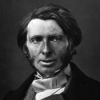
John Ruskin
John Ruskinwas the leading English art critic of the Victorian era, also an art patron, draughtsman, watercolourist, a prominent social thinker and philanthropist. He wrote on subjects as varied as geology, architecture, myth, ornithology, literature, education, botany and political economy. His writing styles and literary forms were equally varied. Ruskin penned essays and treatises, poetry and lectures, travel guides and manuals, letters and even a fairy tale. The elaborate style that characterised his earliest writing on art was later superseded...
NationalityEnglish
ProfessionWriter
Date of Birth8 February 1819
If we pretend to have reached either perfection or satisfaction, we have degraded ourselves and our work. God's work only may express that, but ours may never have that sentence written upon it, Behold it was very good.
Variety is a positive requisite even in the character of our food.
He who has learned what is commonly considered the whole art of painting, that is, the art of representing any natural object faithfully, has as yet only learned the language by which his thoughts are to be expressed.
Value is the life-giving power of anything; cost, the quantity of labour required to produce it; its price, the quantity of labourwhich its possessor will take in exchange for it.
Repose demands for its expression the implied capability of its opposite,--energy.
Milton saw not, and Beethoven heard not, but the sense of beauty was upon them, and they fain must speak.
You may assuredly find perfect peace, if you are resolved to do that which your Lord has plainly required--and content that He should indeed require no more of you--than to do justice, to love mercy, and to walk humbly with Him.
No nation can last which has made a mob of itself, however generous at heart.
The power of association is stronger than the power of beauty; therefore, the power of association is the power of beauty.
He who offers God a second place offers Him no place.
Nothing can be true which is either complete or vacant; every touch is false which does not suggest more than it represents, and every space is false which represents nothing.
The highest thoughts are those which are least dependent on language, and the dignity of any composition and praise to which it is entitled are in exact proportion to its dependency of language or expression.
If only the Geologists would let me alone, I could do very well, but those dreadful Hammers! I hear the clink of them at the end of every cadence of the Bible verses.
There is nothing that this age, from whatever standpoint we survey it, needs more, physically, intellectually, and morally, than thorough ventilation.