Samuel Johnson
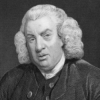
Samuel Johnson
Samuel Johnson, often referred to as Dr Johnson, was an English writer who made lasting contributions to English literature as a poet, essayist, moralist, literary critic, biographer, editor and lexicographer. Johnson was a devout Anglican and committed Tory, and has been described as "arguably the most distinguished man of letters in English history". He is also the subject of "the most famous single biographical work in the whole of literature," James Boswell's Life of Samuel Johnson...
NationalityEnglish
ProfessionNon-Fiction Author
Date of Birth18 September 1709
What is read twice is usually remembered more than what is once written.
Power is gradually stealing away from the many to the few, because the few are more vigilant and consistent.
Laws teach us to know when we commit injury and when we suffer it.
Men seldom give pleasure when they are not pleased themselves.
Advice is seldom welcome. Those who need it most, like it least.
Men who stand in the highest ranks of society seldom hear of their faults; if by any accident an opprobrious clamour reaches their ears, flattery is always at hand to pour in her opiates, to quiet conviction and obtund remorse.
The mischief of flattery is, not that it persuades any man that he is what he is not, but that it suppresses the influence of honest ambition, by raising an opinion that honour may be gained without the toil of merit.
Just praise is only a debt, but flattery is a present. The acknowledgment of those virtues on which conscience congratulates us is a tribute that we can at any tine exact with confidence; but the celebration of those which we only feign, or desire without any vigorous endeavours to attain them, is received as a confession of sovereignty over regions never conquered, as a favourable decision of disputable claims, and is more welcome as more gratuitous.
It is scarcely credible to what degree discernment may be dazzled by the mist of pride, and wisdom infatuated by the intoxication of flattery.
In order that all men may be taught to speak truth, it is necessary that all likewise should learn to hear it; for no species of falsehood is more frequent than flattery, to which the coward is betrayed by fear, the dependent by interest, and the friend by tenderness: those who are neither servile nor timorous are yet desirous to bestow pleasure; and, while unjust demands of praise continue to be made, there will always be some whom hope, fear, or kindness will dispose to pay them.
But, perhaps, the flatterer is not often detected; for an honest mind is not apt to suspect, and no one exerts the power of discernment with much vigour when selflove favors the deceit.
To be flattered is grateful, even when we know that our praises are not believed by those who pronounce them; for they prove, at least, our power, and show that our favour is valued, since it is purchased by the meanness of falsehood.
Pope had been flattered till he thought himself one of the moving powers of the system of life. When he talked of laying down his pen, those who sat round him intreated and implored; and self-love did not suffer him to suspect that they went away and laughed.
You think I love flattery (says Dr. Johnson), and so I do; but a little too much always disgusts me: that fellow Richardson, on the contrary, could not be contented to sail quietly down the stream of reputation, without longing to taste the froth from every stroke of the oar.