Samuel Johnson
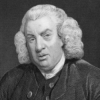
Samuel Johnson
Samuel Johnson, often referred to as Dr Johnson, was an English writer who made lasting contributions to English literature as a poet, essayist, moralist, literary critic, biographer, editor and lexicographer. Johnson was a devout Anglican and committed Tory, and has been described as "arguably the most distinguished man of letters in English history". He is also the subject of "the most famous single biographical work in the whole of literature," James Boswell's Life of Samuel Johnson...
NationalityEnglish
ProfessionNon-Fiction Author
Date of Birth18 September 1709
God Himself, sir, does not propose to judge a man until his life is over. Why should you and I?
You are much surer that you are doing good when you pay money to those who work, as the recompense of their labor, than when you give money merely in charity.
Our desires always increase with our possessions. The knowledge that something remains yet unenjoyed impairs our enjoyment of the good before us.
It is very strange, and very melancholy, that the paucity of human pleasures should persuade us ever to call hunting one of them.
The most Heterogeneous ideas are yoked by violence together.
As any action or posture, long continued, will distort and disfigure the limbs, so the mind likewise is crippled and contracted by perpetual application to the same set of ideas.
That friendship may be at once fond and lasting, there must not only be equal virtue on each part, but virtue of the same kind; not only the same end must be proposed, but the same means must be approved by both.
When female minds are embittered by age or solitude, their malignity is generally exerted in a rigorous and spiteful superintendence of domestic trifles.
If the abuse be enormous, nature will rise up, and claiming her original rights, overturn a corrupt political system.
Of all the grief's that harass the distressed; sure the most bitter is a scornful jest.
No mind is much employed upon the present; recollection and anticipation fill up almost all our moments.
In lapidary inscriptions a man is not upon oath.
There is certainly no greater happiness than to be able to look back on a life usefully and virtuously employed, to trace our own progress in existence, by such tokens as excite neither shame nor sorrow.
I would advise no man to marry who is not likely to propagate understanding.