Samuel Johnson
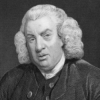
Samuel Johnson
Samuel Johnson, often referred to as Dr Johnson, was an English writer who made lasting contributions to English literature as a poet, essayist, moralist, literary critic, biographer, editor and lexicographer. Johnson was a devout Anglican and committed Tory, and has been described as "arguably the most distinguished man of letters in English history". He is also the subject of "the most famous single biographical work in the whole of literature," James Boswell's Life of Samuel Johnson...
NationalityEnglish
ProfessionNon-Fiction Author
Date of Birth18 September 1709
The certainty that life cannot be long, and the probability that it will be much shorter than nature allows, ought to awaken every man to the active prosecution of whatever he is desirous to perform. It is true, that no diligence can ascertain success; death may intercept the swiftest career; but he who is cut off in the execution of an honest undertaking has at least the honour of falling in his rank, and has fought the battle, though he missed the victory.
The applause of a single human being is of great consequence.
To a people warlike and indigent, an incursion into a rich country is never hurtful.
Much may be made of a Scotchman, if he be caught young.
The violence of war admits no distinction; the lance, that is lifted at guilt and power, will sometimes fall on innocence and gentleness.
It is, indeed, at home that every man must be known by those who would make a just estimate either of his virtue or felicity; for smiles and embroidery are alike occasional, and the mind is often dressed for show in painted honor, and fictitious benevolence.
When speculation has done its worst, two and two still make four.
Why, sir, Sherry is dull, naturally dull; but it must have taken him a great deal of pains to become what we now see him. Such an excess of stupidity, Sir, is not in Nature.
Life is a pill which none of us can bear to swallow without gilding.
Knowledge always desires increase, it is like fire, which must first be kindled by some external agent, but which will afterwards propagate itself.
Whoever envies another confesses his superiority.
The triumph of hope over experience.
Yet it is necessary to hope, though hope should always be deluded, for hope itself is happiness, and its frustrations, however frequent, are yet less dreadful than its extinction.
Hope is necessary in every condition. The miseries of poverty, sickness and captivity would, without this comfort, be insupportable.