Samuel Johnson
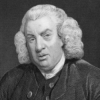
Samuel Johnson
Samuel Johnson, often referred to as Dr Johnson, was an English writer who made lasting contributions to English literature as a poet, essayist, moralist, literary critic, biographer, editor and lexicographer. Johnson was a devout Anglican and committed Tory, and has been described as "arguably the most distinguished man of letters in English history". He is also the subject of "the most famous single biographical work in the whole of literature," James Boswell's Life of Samuel Johnson...
NationalityEnglish
ProfessionNon-Fiction Author
Date of Birth18 September 1709
Health is so necessary to all the duties, as well as pleasures of life, that the crime of squandering it is equal to the folly.
No man can enjoy happiness without thinking that he enjoys it.
Philosophers there are who try to make themselves believe that this life is happy; but they believe it only while they are saying it, and never yet produced conviction in a single mind.
Every period of life is obliged to borrow its happiness from time to come.
All severity that does not tend to increase good, or prevent evil, is idle.
Reproof should not exhaust its power upon petty failings.
Life is barren enough surely with all her trappings; let us be therefore cautious of how we strip her.
What we read with inclination makes a much stronger impression. If we read without inclination, half the mind is employed in fixing the attention; so there is but one half to be employed on what we read.
He who would bring home the wealth of the Indies must carry the wealth of the Indies with him.
Since every man is obliged to promote happiness and virtue, he should be careful not to mislead unwary minds, by appearing to set too high a value upon things by which no real excellence is conferred.
Idleness is often covered by turbulence and hurry. He that neglects his known duty and real employment naturally endeavours to crowd his mind with something that may bar out the remembrance of his own folly, and does any thing but what he ought to do with eager diligence, that he may keep himself in his own favour.
If we will have the kindness of others, we must endure their follies.
Sir, you must not neglect doing a thing immediately good from fear of remote evil; -from fear of its being abused.
He that accepts protection, stipulates obedience.