Samuel Johnson
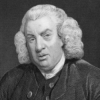
Samuel Johnson
Samuel Johnson, often referred to as Dr Johnson, was an English writer who made lasting contributions to English literature as a poet, essayist, moralist, literary critic, biographer, editor and lexicographer. Johnson was a devout Anglican and committed Tory, and has been described as "arguably the most distinguished man of letters in English history". He is also the subject of "the most famous single biographical work in the whole of literature," James Boswell's Life of Samuel Johnson...
NationalityEnglish
ProfessionNon-Fiction Author
Date of Birth18 September 1709
Questioning is not the mode of conversation among gentlemen.
He was dull in a new way, and that made many think him great.
No one ever became great by imitation.
The superiority of some men is merely local. They are great because their associates are little.
Advertisements are now so numerous that they are very negligently perused, and it is therefore become necessary to gain attention by magnificence of promises, and by eloquence sometimes sublime and sometimes pathetic.
Whatever is formed for long duration arrives slowly to its maturity.
Golf is a game in which you claim the privileges of age, and retain the playthings of childhood.
Claret is the liquor for boys; port for men; but he who aspires to be a hero must drink brandy.
More knowledge may be gained of a man's real character by a short conversation with one of his servants than from a formal and studied narrative, begun with his pedigree and ended with his funeral.
Pride is seldom delicate; it will please itself with very mean advantages.
Whatever you have spend less.
That all who are happy are equally happy is not true. A peasant and a philosopher may be equally satisfied, but not equally happy. A small drinking glass and a large one may be equally full, but the large one holds more than the small.
The pleasure of expecting enjoyment is often greater than that of obtaining it, and the completion of almost every wish is found a disappointment.
He who expects much will be often disappointed; yet disappointment seldom cures us of expectation, or has any other effect than that of producing a moral sentence or peevish exclamation.